


Dog Care in Winter
How to keep your dog safe, warm, and healthy.
Winter can be a challenging time for dogs and their owners. Cold temperatures, icy pavements, shorter days, and harsh weather all affect your dog’s health and wellbeing. Proper dog care in winter is essential to keep your pet comfortable, safe, and happy throughout the colder months.
How cold weather affects dogs
Just like humans, dogs can feel the effects of cold weather. While some breeds are built for winter conditions, many dogs are vulnerable to cold-related issues such as hypothermia, frostbite, dry skin, and stiff joints.
Short-haired breeds, small dogs, puppies, senior dogs, and dogs with health conditions are especially sensitive to low temperatures and may need extra protection during winter.
Keeping your dog warm in winter
One of the most important aspects of winter dog care is keeping your dog warm:
- Dog coats and jumpers: Short-haired or small dogs can benefit from wearing a well-fitted, waterproof coat on walks. Make sure this is something your dog is comfortable with by introducing a jacket slowly and positively if they aren’t used to wearing one.
- Warm sleeping areas: Ensure your dog’s bed is raised off cold floors and placed away from draughts.
- Limit outdoor time: Reduce time spent outside in freezing temperatures, especially for vulnerable dogs.
- Watch for signs: If your dog shivers, seems reluctant to walk, or curls up tightly, these may be signs they are too cold.
How cold it too cold to walk your dog in winter?
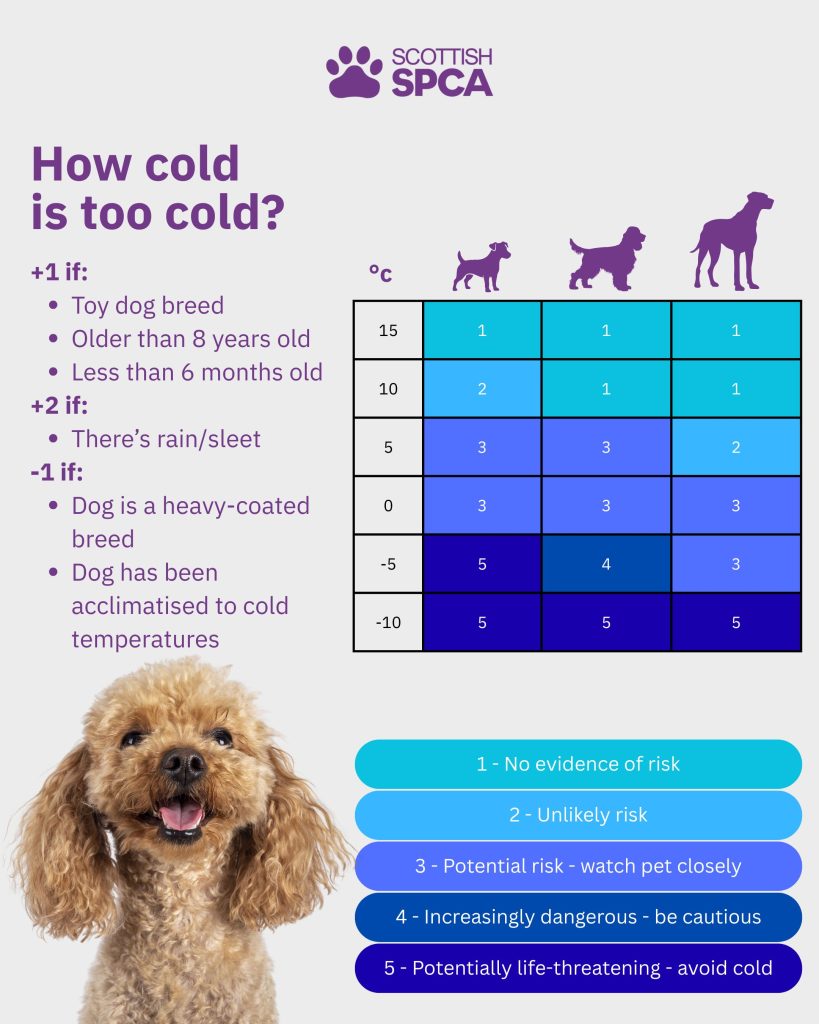
There isn’t a single temperature that’s “too cold” for every dog. According to veterinary guidance, cold tolerance depends on a combination of breed type, coat, size, age, and body condition.
Rather than relying on temperature alone, vets assess individual risk and Body Condition Score (BCS) plays a key role. As a baseline:
Above 10°C: Generally safe for most healthy dogs
0-10°C: Caution zone for small, toy breed, and senior dogs
Below 0°: Increased risk for most dogs
Below -10°C: Dangerous for many dogs, especially without protection
These ranges are starting points, not rules:
+1 if:
- Toy breed
- Older than 8 years old
- Less than 6 months old
+2 if:
- There’s rain/sleet
-1 if:
- Dog is a heavy-coated breed
- Dog has acclimatised to cold temperatures
Signs it’s too cold for your dog
Stop the walk if your dog shows signs of cold stress, including:
- Shivering or lifting paws
- Reluctance to walk or trying to turn back
- Hunched posture or tucked tail
- Whining or anxiety
How to walk your dog safely in cold weather
- Shorten walks in colder temperatures
- Use dog coats for short-haired, small, or senior dogs
- Protect paws from ice, grit, and salt
- Avoid icy surfaces that increase injury risk
When in doubt, shorter walks, extra protection, and careful observation are the safest choices.
Winter safety tips for dogs
- Avoid frozen ponds and lakes: Ice can break unexpectedly.
- Watch antifreeze spills: Antifreeze is extremely toxic to dogs, even in small amounts.
- Protect paws: Ice, snow, grit, and road salt can irritate or crack paw pads. Rinse and dry paws after walks and never let your dog lick salt or grit from their paws, as it can be toxic.
- Consider dog boots: These can protect paws from ice and chemicals.
- Shorter, safer walks: Avoid icy paths and walk during daylight hours when visibility is better.
- Adjust your plans: If you are less able to walk your dog due to wintry conditions, spend time with them inside instead. You can teach them new tricks using their favourite treats/toys, play with them, and provide enrichment such as snuffle mats to use their energy and mentally stimulate them whilst keeping them safe and warm.
With the right care, winter can still be an enjoyable season for you and your dog. By keeping them warm, protecting their paws, and adjusting routines, you can ensure your dog stays healthy and comfortable all winter long.
Find out more



Together, we care for them
With your support, we can continue to care for Scotland’s animals every minute of every day. Your donation funds campaigns, research and projects to help give animals the life they deserve. Every £1 matters to all animals in our care.
