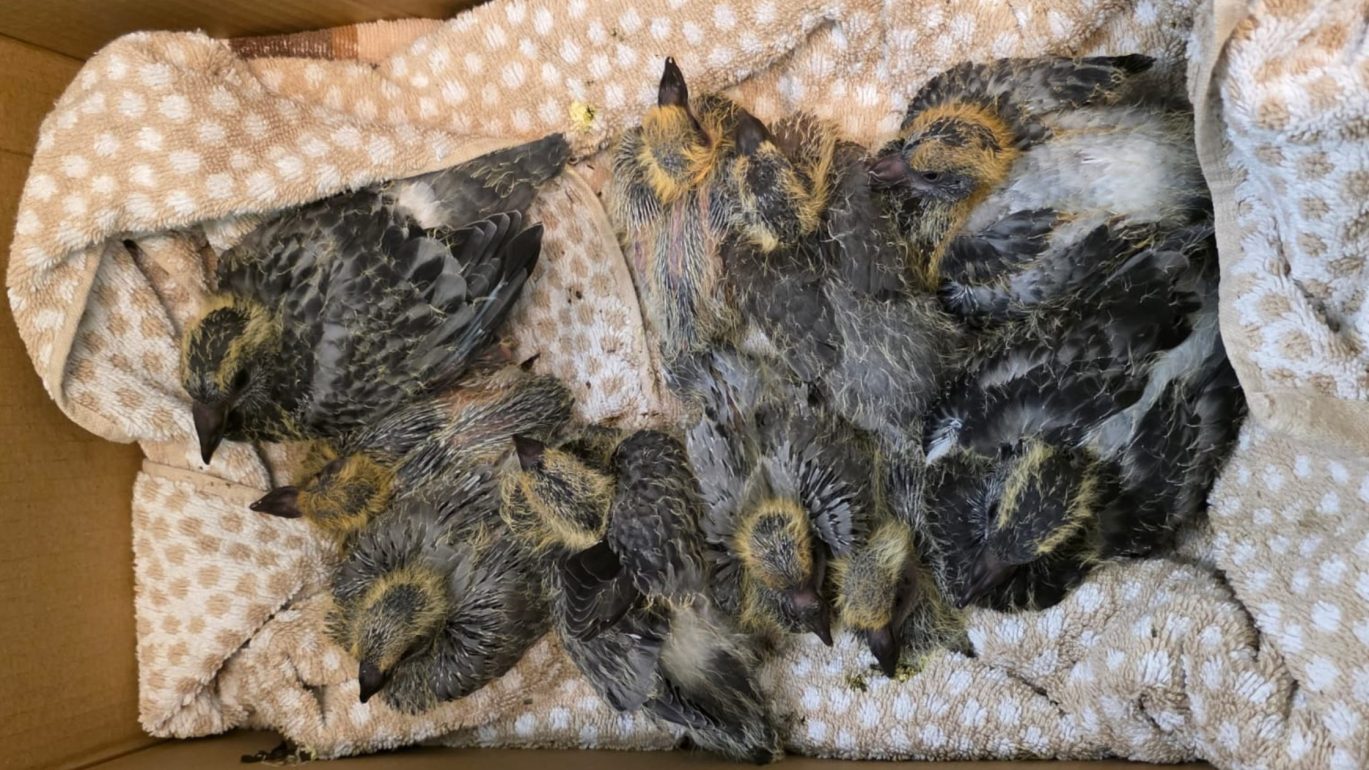
The Scottish SPCA has confirmed that the ten nestlings are all of differing ages so it’s likely that they have come from multiple nests.
The group arrived in a box at the animal welfare organisation’s National Wildlife Rescue Centre at Fishcross on 29 May. They were found by a member of the public in Kirkcaldy who initially contacted a local charity for support but they were unable to help. They were then subsequently transported to a vet practice – where they were collected by a Scottish SPCA Animal Rescue Officer.
Chris Smith, Wildlife Manager at the centre, said that a dead adult pigeon was also discovered next to the group of young birds. He explained: “We suspect that multiple nests were disturbed by a member of the public who then moved them to the layby location.
“No nests were found on the ground near the birds so we have no evidence of who or what location they may have come from.”
Supporting their growth
Each nestling is now receiving extensive treatment from the centre team and, due to their varying ages, have been split into a number of groups to ensure they are all receiving the required care. They were tube fed on arrival, with smaller birds placed in temperature-controlled incubators. They were then tube fed three to five times a day with an easy-to-digest hand feeding formula to support their growth.
Chris added: “Once they are large enough, the pigeons will be placed in an outdoor aviary with up to 15 others to build up their flight muscles and encourage more natural foraging behaviour before they’re released.
“A nestling will either be fluffy, sparsely feathered or have no feathers at all. They are too young to survive out of the nest so are highly vulnerable.
“If you come across a nestling and you know where the nest is, you can carefully put the bird back into the nest. If the nest location is unknown, you can create a replacement using a small cardboard box and line it with moss, grass and tissue before placing the makeshift nest in a bush or tree near to where the nestling was found so that its parents can feed it from there. It is advised to watch from a distance and the parents should come to attend to the young bird.
What to do if you come across a baby bird
“It is very common for well-meaning people to disturb or accidentally rescue a baby bird when it doesn’t need to be rescued at all.”
To find out more about what to do if you come across a baby bird or wildlife that is believed to be injured/sick, you can reach us on our Report a Concern page.