Two men have been convicted of failing to seek veterinary attention for his flea-infested cat, causing him unnecessary suffering for months.
Allan Bothwell and Tylar Mullen were banned from owning or keeping animals for five years after they admitted breaches of animal welfare legislation on 23 April at Hamilton Sheriff Court.
Mullen was also subject to a £675 fine and Bothwell was fined £750.
A Scottish SPCA Inspector attended the property on 24 April 2025, after concerns for the welfare of four cats were raised to the society’s animal helpline.
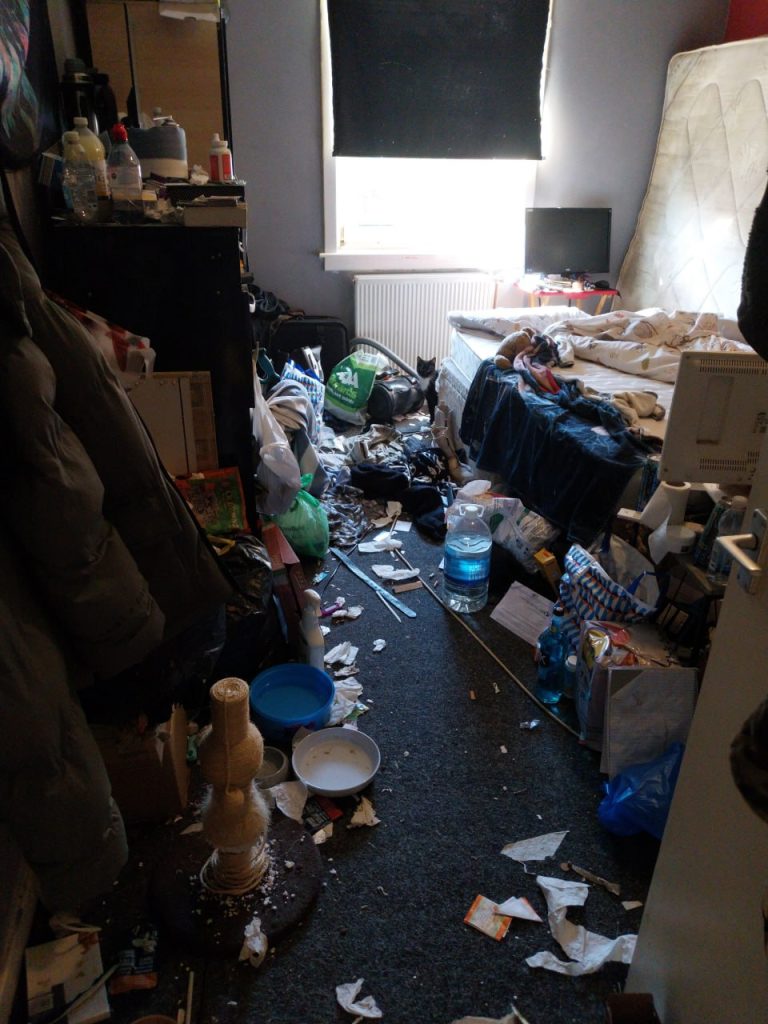
Upon entry to the property, it was immediately clear it was extremely unkept, making it difficult to walk through.
The Scottish SPCA Inspector said: “The living conditions were horrendous. There was rubbish and cat litter spilled everywhere. The smell of marijuana was overpowering. Numerous cats were seen darting around throughout the waste and upturned furniture.”
An overpowering smell of decay
Kiera, a four-year old cat, was found in the kitchen in seriously poor condition.
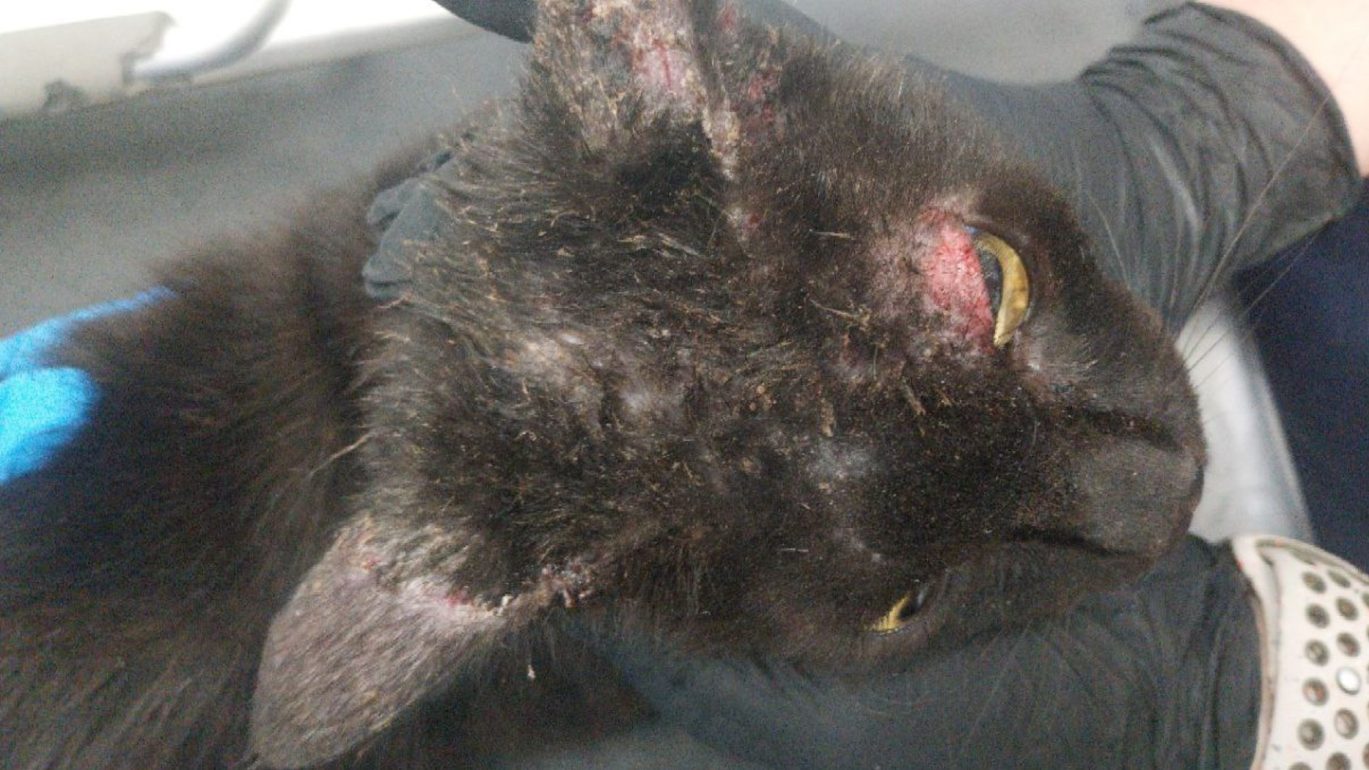
The Inspector said: “Once close enough I could smell an overpowering smell of decay emanating from the cat. Kiera was in horrendous condition and covered in open sores. He was extremely underweight and was covered in fleas. It would’ve been evident to any responsible owner that the cat needed urgent veterinary care.”
It was then decided it was in the best interest of Kiera, and the remaining three cats at the property, to be removed and taken into the care of the Scottish SPCA.
The cats were then transported to a veterinary practice for further examination.
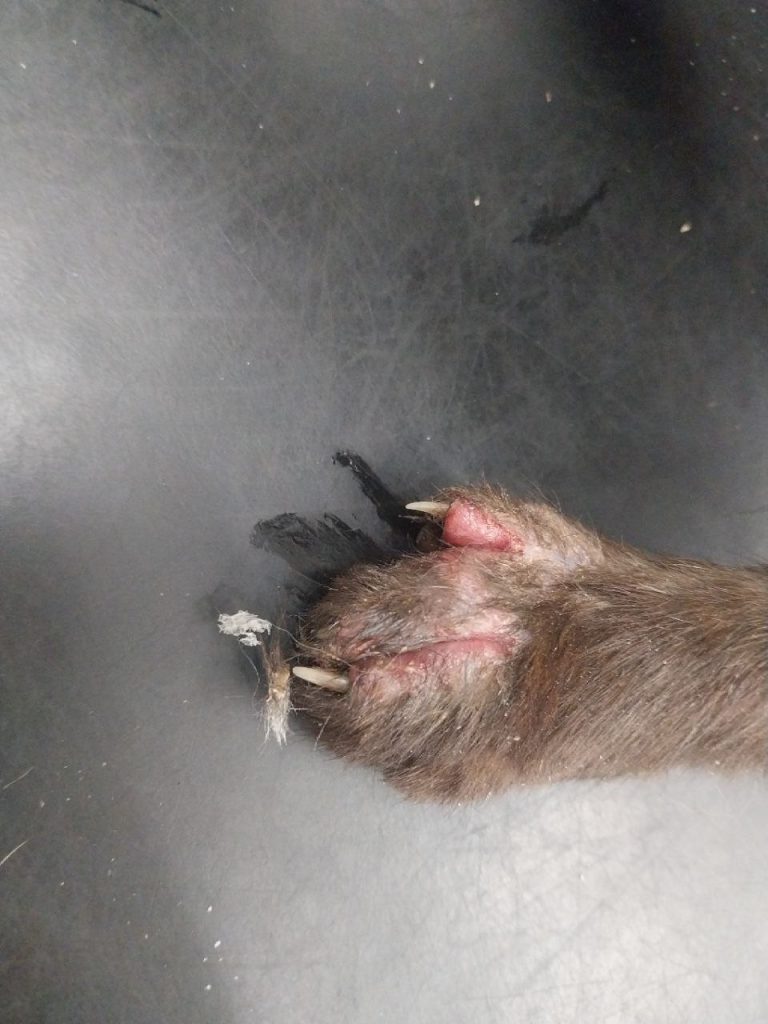
Keira was found to be extremely underweight, with a body score of 2/9. His penis was extremely swollen. He was covered in lesions at various stages of healing, and his skin was inflamed. He also had significant hair loss, and his coat was infested with fleas, with lots of skin flakes coming off it onto the examination table.
It would have been obvious at home that he was uncomfortable
He was given pain relief medication along with antibiotics as some lesions appeared infected.
The vet said: “Due to his condition, his clear pain on cleaning and the irritation he felt on his skin even whilst under general anaesthetic I believe that his welfare was severely compromised. In my experience his lesions are suggestive of a flea allergy dermatitis and severe urine scalding of his hind limbs which has led to a secondary infection. It would have been obvious at home that he was uncomfortable.
“Keira’s owners caused him unnecessary suffering by failing to seek veterinary advice for an obvious skin issue and I suspect this issue went on for two to three months at least. His skin irritation will have had very few, if any, moments of ease over this period and it is likely that he suffered every day since the beginning of this condition. To allow the skin to get to a point of secondary infection shows a clear disregard for this patient’s welfare and quality of life at home. If veterinary advice had been sought out, I believe Keira’s condition would have significantly improved, if not fully resolved.”
Both decided to ignore their pet’s clear pain to the point of no return
The remaining three cats were also found to have fleas, scabbing and hair loss. They were transported to the Scottish SPCA’s Lanarkshire Rescue and Rehoming Centre for ongoing care and treatment. Keira was also later taken to the Scottish SPCA’s Glasgow Rescue and Rehoming Centre for ongoing care and treatment.
Keira’s health significantly deteriorated and he was euthanised on welfare grounds.
Reacting to the sentencing, the Scottish SPCA Inspector, said: “We are pleased with the Sheriff’s decision. Keira’s heart-breaking suffering, and death, were completely avoidable. However, both decided to ignore their pet’s clear pain, leading to his health deteriorating to a point of no return.
“While a ban is the only way to ensure that this does not happen again to any animal, there is currently no system to monitor disqualification orders or track repeat offenders, which will significantly reducing the power of this sentencing. That’s why we’re calling for the creation of a National Animal Offenders Register, so criminals like both cannot go on to hurt other animals undetected. This is a key step in preventing future harm, and one that the next Parliament must consider seriously. These policy decisions play a crucial role in delivering.”
Prevent future harm and tackle repeat offending
The Scottish SPCA’s call for a National Animal Offenders Register is one of the four main asks of its recently published manifesto. Delivering on these will help ensure Scotland is at the forefront of animal welfare and is crucial to prevent future harm and tackle repeat offending. In turn, this is essential to help achieve our mission to make Scotland the best place for an animal to call home. Read our full Manifesto and sign our petition to show your support.
To report a concern of cruelty, visit our contact webpage.